Sleep and erections: morning wood, testosterone and sleep apnea
The studies and sources we used are listed at the end. Not reviewed by a doctor. Editorial policy
Fewer morning erections lately. Tired all the time. Sleep is closely tied to erections and male hormones. Here is what happens in your body while you sleep, and what changes when you don't get enough.
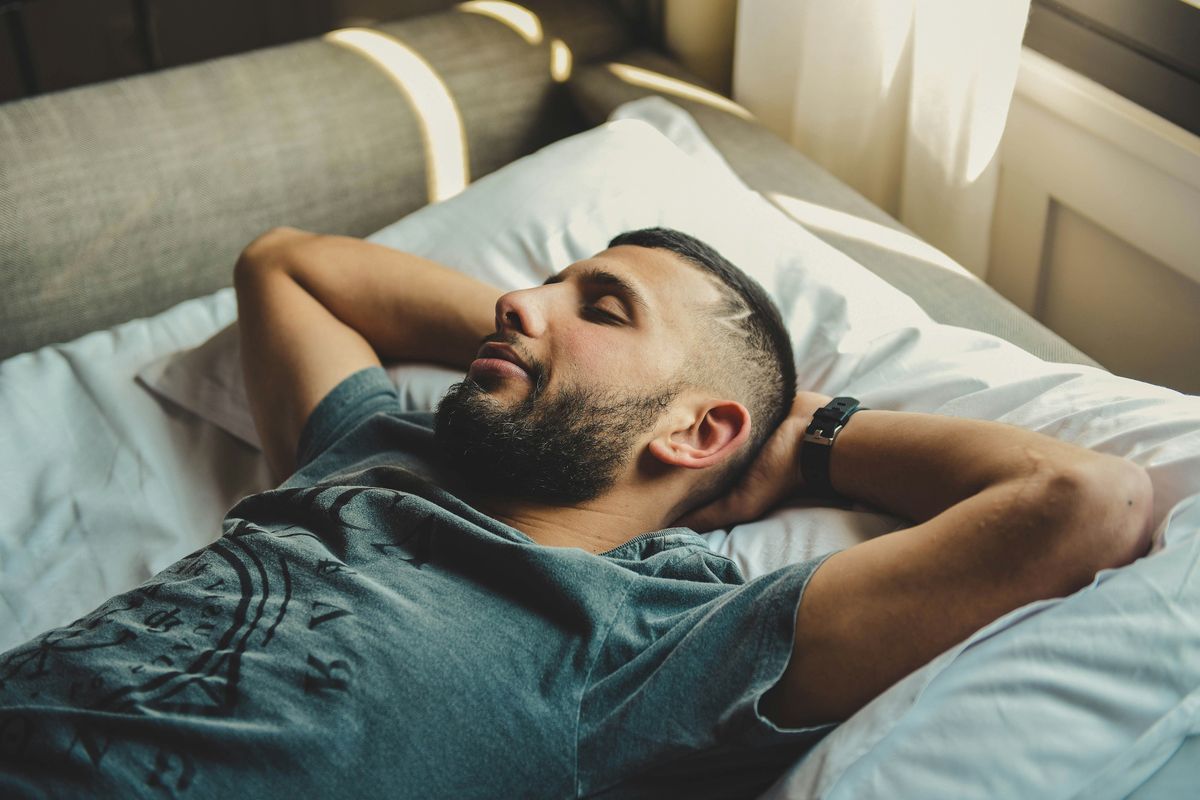
During sleep, men have erections about 3 to 5 times a night. In a study that cut sleep to under 5 hours for a week, testosterone fell by 10 to 15%. In a UK study of about 156,000 men, those who often felt sleepy in the day were about twice as likely to be diagnosed with ED. A joint statement from two sleep medicine societies recommends that adults sleep 7 hours or more.
Contents
Why do morning erections happen?
During sleep, the body cycles between REM sleep (lighter sleep, when most dreaming happens) and non-REM sleep, about every 90 to 120 minutes. In REM sleep, the nerves involved in erections are more active, and erections happen without any sexual stimulation, 3 to 5 times a night, each lasting about 10 to 30 minutes.
If you wake up during REM sleep, you wake up with an erection: that is morning wood. If you still get morning erections but things don't work during sex, nerves or other psychological factors may be involved. If you have had no morning erections for weeks and also have trouble with erections in general, that is a reason to see a doctor.
Sleep and testosterone
- Found
- After a week of sleeping under 5 hours, daytime testosterone was 10 to 15% lower
- Caveat
- Very few men and only one week. It did not test whether sleeping more raises testosterone
Testosterone (male hormone) plays a part in sex drive, erections and muscle mass. Much of it is released during sleep, so short sleep is thought to affect it.
Research on sleep and ED
A UK study that followed about 156,000 men for more than 11 years found that men who often felt sleepy during the day were about 2.05 times as likely to be diagnosed with ED, and men who found it hard to get up in the morning about 1.85 times as likely.
A Turkish review of 42 studies also found that poor sleep quality went along with more ED and premature ejaculation.
Both are observational, though. It is still unclear whether poor sleep causes ED, or whether illnesses and stress behind ED also disturb sleep.
Snoring and sleep apnea
Loud snoring, or pauses in breathing during sleep, may point to obstructive sleep apnea. A meta-analysis of 28 studies on sleep apnea and ED (Kellesarian et al., 2018) concluded that ED is more common in men with sleep apnea.
Sleep apnea is also linked to high blood pressure and heart disease. If your partner notices snoring or pauses in your breathing, or you are very sleepy in the day, ask your doctor about a sleep assessment. If it is found, there are treatments.
Things to look at for better sleep
A joint statement from the American Academy of Sleep Medicine and the Sleep Research Society (2015) recommends that adults regularly sleep 7 hours or more a night. These habits are commonly recommended:
- Get up at the same time: don't shift it much on weekends.
- Cut back on alcohol before bed: it may help you fall asleep, but you are more likely to wake in the night.
- Less phone time before bed: bright screens keep sleepiness away.
- Move during the day: aerobic exercise is linked to sleep and to the blood vessels involved in erections.
When to see a doctor
If you have had no morning erections for weeks and trouble with erections in general, see a urologist or men's health clinic. For loud snoring or strong daytime sleepiness, see your doctor about a sleep clinic referral. If you keep sleeping badly, your doctor can help with that too.
FAQ
Is lack of sleep linked to ED?
A link has been reported. In a UK study that followed about 156,000 men, those who often felt sleepy during the day were about twice as likely to be diagnosed with ED. It was an observational study, so it cannot show that poor sleep causes ED.
Does short sleep lower testosterone?
In a study that limited 10 healthy young men to under 5 hours of sleep for a week (Leproult and Van Cauter, 2011), daytime testosterone fell by 10 to 15%. The study was very small and short, but it is one of the results that link sleep and male hormones.
How many hours of sleep do I need?
A joint statement from the American Academy of Sleep Medicine and the Sleep Research Society (2015) recommends that adults regularly sleep 7 hours or more a night. How much you need varies, and whether you wake up feeling rested is a useful guide too.
I snore loudly. Could that be linked to ED?
Loud snoring and pauses in breathing during sleep can be signs of sleep apnea. Many studies have looked at sleep apnea and ED, and most report a link. Sleep apnea is also tied to heart and blood vessel disease, so if your partner notices it, ask your doctor about a sleep assessment.
References
- Ubie Doctor's Note. Morning wood: what your erections say about your health. ubiehealth.com/doctors-note/morning-wood-health-indicators-e
- Leproult R, Van Cauter E. Effect of 1 week of sleep restriction on testosterone levels in young healthy men. JAMA. 2011;305(21):2173-2174. stacks.cdc.gov/view/cdc/212252
- Kellesarian SV, et al. Association between obstructive sleep apnea and erectile dysfunction: a systematic review and meta-analysis. Int J Impot Res. 2018;30(3):129-140. link.springer.com/article/10.1038/s41443-018-0017-7
- Watson NF, et al. Recommended Amount of Sleep for a Healthy Adult: A Joint Consensus Statement of the American Academy of Sleep Medicine and Sleep Research Society. J Clin Sleep Med. 2015;11(6):591-592. doi.org/10.5664/jcsm.4758