Magnesium deficiency in men: why diets fall short, and what to eat
The studies and sources we used are listed at the end. Editorial policy
Magnesium quietly supports your muscles, nerves and blood vessels. In US survey data, about half of people get less from food than they need, and the same is true of men in Japan. Here is why, and what to eat and how much.
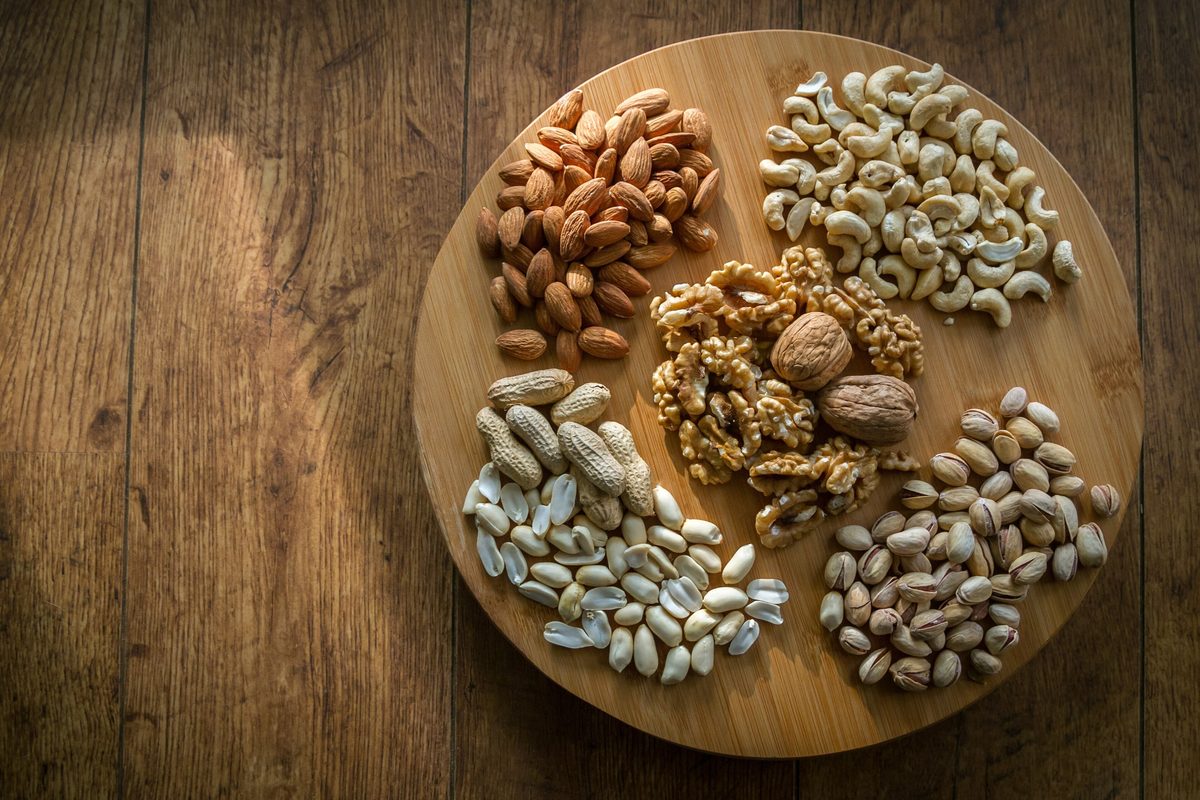
The US recommended amount (RDA) of magnesium for men is 400 mg a day at 19 to 30 and 420 mg from 31. In US national survey data, 48% of Americans got less magnesium from food and drink than their estimated requirement. In Japan, men average 270 mg a day against a national recommendation of 330 to 380 mg. Diets built on white bread, white rice and pasta, with few beans, nuts, seeds or greens, run low. An ounce of pumpkin seeds has about 156 mg. Start with food, and if you use a supplement, keep it to 350 mg a day.
Contents
What magnesium does
Magnesium helps more than 300 enzymes in the body do their work. An adult body holds about 25 g, and 50 to 60% of it is in the bones. Its main jobs:
- Energy: it takes part in getting energy out of food and in building protein.
- Muscles: calcium helps muscles contract; magnesium works on the relaxing side.
- Nerves: it helps nerve signals pass along.
- Blood vessels: it is involved in widening blood vessels.
An erection depends on blood vessels in the penis widening so blood can flow in, with the pelvic floor (PC) muscles helping to hold it. No study has shown that more magnesium improves erections, but it is one of the nutrients that muscles and blood vessels rely on.
How much men need, and how much they get
| Men, age | US RDA (a day) |
|---|---|
| 19–30 | 400 mg |
| 31 and over | 420 mg |
| Upper limit from supplements and medicines | 350 mg |
NIH Office of Dietary Supplements. The upper limit applies only to magnesium from supplements and medicines, not food.
In the US National Health and Nutrition Examination Survey (2013–2016), 48% of Americans of all ages got less magnesium from food and drink than their estimated average requirement, and men aged 71 and over were among the groups most likely to fall short. Japan's figures point the same way: in the 2019 national survey, men aged 20 and over averaged 270 mg a day, 60 to 110 mg below Japan's recommendation for their age, with the biggest gap in their 30s and 40s.
Why modern diets fall short
Refined grains
Most of the magnesium in a grain sits in the germ and bran, which refining removes. Japan's food composition tables show it clearly for rice: 100 g of cooked brown rice has 49 mg, white rice 7 mg. White bread and ordinary pasta lose magnesium the same way.
Few beans, nuts, seeds and greens
The richest sources are seeds, nuts, beans and leafy greens. A week of sandwiches, burgers and pasta can contain very little of any of them.
Alcohol
Magnesium deficiency is common in people with long-term heavy drinking, partly because more is lost in the urine.
Medicines and conditions
Long-term use of some diuretics (loop and thiazide types) can increase the magnesium lost in urine. People with insulin resistance or type 2 diabetes can also lose more in urine.
You often read that sweat or stress drain magnesium; we did not find that in the official sources we checked.
What happens when you are low
First, clear magnesium deficiency is uncommon in healthy people who eat normally: the kidneys hold back magnesium to keep the body's level steady. Eating below the recommended amount for years is a different matter. Official sources describe:
- Early signs: loss of appetite, nausea, tiredness and weakness. All of them are vague and have many other causes.
- As it gets worse: numbness, tingling, muscle cramps and an irregular heartbeat.
So leg cramps alone do not mean you are low in magnesium. Looking at your usual meals tells you more than guessing from symptoms.
Research involving men
- Who
- Men aged 65 and over in the InCHIANTI study of residents of Tuscany, Italy
- Looked at
- Blood magnesium and its link with testosterone and IGF-1 (a growth-related hormone)
- Found
- Even after allowing for age, body size, grip strength and illnesses, men with higher blood magnesium tended to have higher testosterone and IGF-1
- Caveat
- Values were measured once, so it cannot show that more magnesium raises testosterone. It looked at blood levels, not diet, and only at older men
On blood vessels, a meta-analysis of 22 supplement trials reported a small drop in blood pressure: about 3 to 4 mmHg systolic and 2 to 3 mmHg diastolic. The difference is small and varies between people. If your blood pressure is high, follow your doctor's advice rather than relying on a supplement.
What you can do about testosterone through sleep, weight and food is covered in how to raise testosterone naturally.
Foods high in magnesium
Per serving, seeds, nuts, leafy greens, beans and whole grains are the easiest sources. Amounts are from the NIH Office of Dietary Supplements.
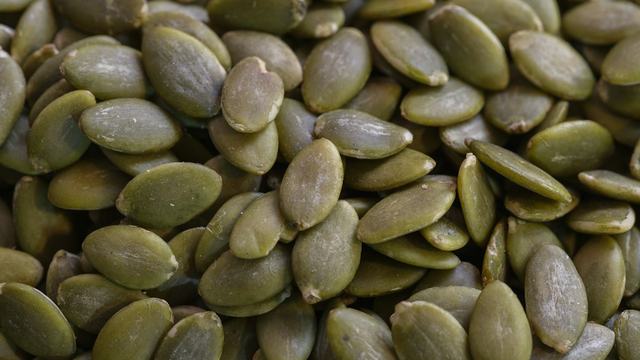
Pumpkin seeds
Magnesium
1 oz (28 g), roasted: about 156 mg
The richest everyday source on the list
 Photo: HaJunkiyada / CC BY-SA 4.0
Almonds
Magnesium
1 oz (28 g), dry roasted: about 80 mg
Cashews are similar: about 74 mg per ounce

Spinach
Magnesium
½ cup, boiled: about 78 mg
 Photo: yomi955 / CC BY 2.0
Edamame
Magnesium
½ cup, shelled and cooked: about 50 mg
Black beans: about 60 mg per ½ cup cooked
 Photo:

Whole wheat bread
Magnesium
1 slice: about 23 mg
An example day
Closing a gap of around 100 mg can look like this:
- Breakfast: whole wheat toast instead of white (two slices, about 46 mg)
- Lunch: add half a cup of black beans to a salad or burrito bowl (about 60 mg)
- Dinner: a side of spinach (about 78 mg per half cup)
- Snack: swap chips for a small handful of almonds or pumpkin seeds (80 to 156 mg)
Nuts and seeds are high in fat too, so a small handful is enough. For other foods that research has looked at, see foods and erectile function.
If you take a supplement
- Upper limit 350 mg a day: for magnesium from supplements and medicines. Food has no upper limit, because healthy kidneys pass the extra in urine.
- Diarrhea: large amounts from supplements or medicines can cause diarrhea, often with nausea and cramping.
- Kidney disease: magnesium can build up in the blood (hypermagnesemia), which can lower blood pressure and cause nausea and heart rhythm changes. Ask your doctor first.
- Laxatives and antacids: some contain magnesium. Check with your doctor or pharmacist that they do not add up with a supplement.
If you want to check your everyday meals
The recommended amount is easy to look up; how much you actually eat is not, unless you add it up. Writing down every meal is hard work, so taking a photo of each meal and looking at the pattern over a week or two is easier to keep up.
Estimates from a photo are rough, not exact amounts.
When to see a doctor
See your doctor, rather than trying food or supplements first, if:
- your heart races, skips or feels irregular
- numbness or muscle cramps keep coming back, or leg cramps suddenly become more frequent
- tiredness or poor appetite lasts more than 2 weeks, or you lose weight without trying
- you take a supplement or laxative and feel dizzy, sick or weak
- diarrhea lasts several days, or comes with fever or blood
- you are drinking more and cannot cut down
If you are being treated for kidney disease, ask the doctor who looks after it.
FAQ
Are frequent leg cramps a sign of low magnesium?
Not necessarily. A large shortfall can cause muscle cramps, but clear magnesium deficiency is uncommon in healthy people who eat normally. Cramps have many causes: too little fluid after sweating, overdoing exercise, medicines, and blood vessel or nerve conditions. If they keep happening, see your doctor.
Can a blood test show whether I get enough magnesium?
Not very well. Less than 1% of the body's magnesium is in the blood, and the body keeps that level tightly controlled; 50 to 60% is in the bones. For a healthy man, looking at what you usually eat is a more practical guide.
Is it safe to take a magnesium supplement every day?
The upper limit for adults is 350 mg a day from supplements and medicines (magnesium in ordinary food has no upper limit). Above that, diarrhea becomes more likely. If you have kidney disease or reduced kidney function, magnesium can build up in the blood, so ask your doctor before taking it.
Do men who drink a lot need more magnesium?
Magnesium deficiency is common in people with long-term heavy drinking. The first step is to drink less, and to pick snacks such as nuts or edamame. If you cannot cut down, or your drinking keeps growing, talk to your doctor.
References
- NIH Office of Dietary Supplements. Magnesium: Fact Sheet for Health Professionals. ods.od.nih.gov/factsheets/Magnesium-HealthProfessional/
- Maggio M, et al. Magnesium and anabolic hormones in older men. Int J Androl. 2011;34(6 Pt 2):e594-e600. pubmed.ncbi.nlm.nih.gov/21675994/
- Health and Longevity Net (Japan Foundation for Aging and Health). Magnesium: functions and daily intake, based on the Dietary Reference Intakes for Japanese (2025). In Japanese. www.tyojyu.or.jp/net/kenkou-tyoju/eiyouso/mineral-mg.html
- National Institutes of Biomedical Innovation, Health and Nutrition (Japan). Safety and effectiveness of health foods: Magnesium (intakes from the 2019 National Health and Nutrition Survey). In Japanese. hfnet.nibn.go.jp/mineral/detail656/
- Ministry of Agriculture, Forestry and Fisheries of Japan. Nutrients in rice: brown rice and polished rice (from the Standard Tables of Food Composition in Japan). In Japanese. www.maff.go.jp/j/syouan/keikaku/soukatu/okome_summary/03/hea